

Table of Contents
- Before You Wash: Preparing Period Underwear After Use
- How to Wash Period Underwear: Machine vs Hand Washing
- Best Detergent for Period Underwear
- What to Avoid When Washing Period Underwear
- How to Remove Stains from Period Underwear
- Can You Put Period Underwear in the Dryer?
- How Water Hardness and Environment Affect Your Wash
- Washing Period Underwear: Quick-Reference Summary
- Frequently Asked Questions
Last Updated: August 31, 2026
Before You Wash: Preparing Period Underwear After Use
Proper preparation before washing is crucial to how well your period underwear holds up over time. Period underwear combines moisture-wicking synthetic fibres with natural fibres like cotton in multiple absorbent layers. If you skip the prep stage, you're essentially setting menstrual fluid into the fabric before it has a chance to release.
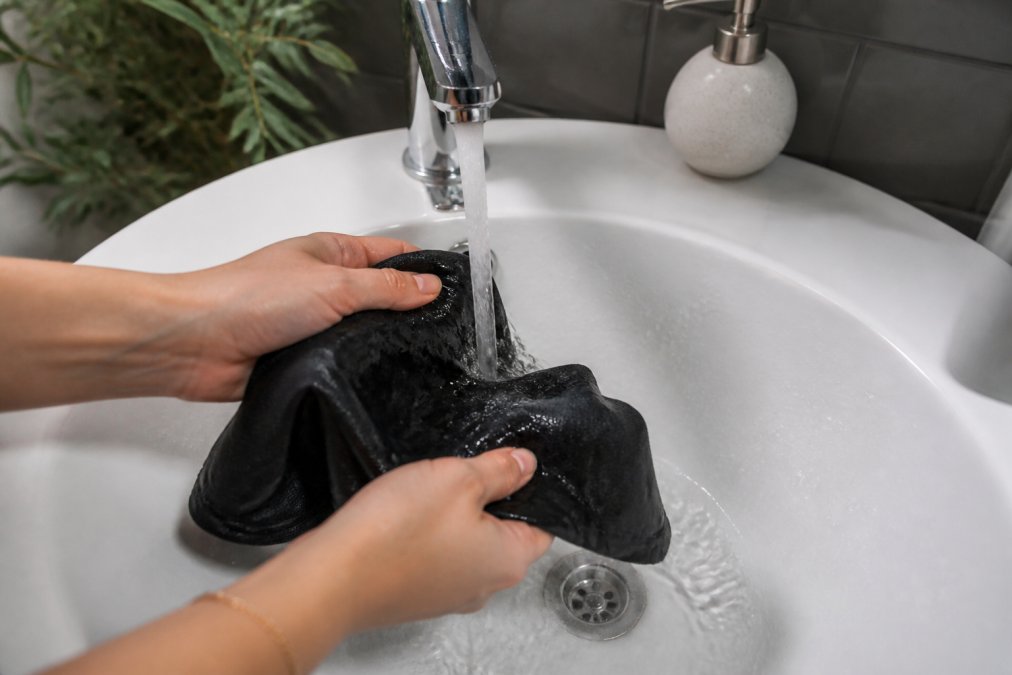
Cold Water Rinse: The Most Important First Step
Run the garment under cold water immediately after use, holding the gusset area under the flow and gently working the fabric until the water runs mostly clear. This two to three minute step makes a significant difference to both hygiene and stain prevention.
Why cold, specifically? Hot water causes proteins in blood to coagulate and bond to fabric fibres, making stains far harder to remove and allowing odour-causing bacteria to embed in the absorbent layers. Cold water keeps proteins from setting, flushing them out before they bond.
The longer fluid sits in the fabric, the more work your wash cycle has to do later. If you're away from home and can't rinse immediately, a quick cold water soak in a bathroom sink for five minutes works well.
Storage Before Washing
Never seal used period underwear in an airtight bag or container before washing. Without airflow, bacteria multiply rapidly in damp fabric, leading to persistent odour that no wash cycle will fully resolve.
Store rinsed period underwear in a breathable wet bag or ventilated laundry basket. If storing multiple pairs before wash day, ensure each has been cold-rinsed first. Rinsing immediately and storing in a mesh laundry bag ready for the machine works best.
How to Wash Period Underwear: Machine vs Hand Washing
Period underwear works well with both machine washing and hand washing. The right choice depends on your routine, the care label, and your available time.
Method |
Best For |
Water Temperature |
Cycle Setting |
|---|---|---|---|
Machine wash |
Regular maintenance washes |
Cold (30°C max) |
Delicate cycle |
Hand wash |
Travel, single pairs, delicate styles |
Cold to lukewarm |
Gentle agitation |
Soaking |
Stubborn odour or deep cleaning |
Cold |
20-30 min soak, then rinse |
Machine Washing Instructions
- Place the underwear in your Calm Curve mesh laundry bag to protect absorbent layers from snagging and reduce friction that degrades fabric.
- Select the delicate cycle for slower agitation and shorter spin.
- Set water temperature to cold or no higher than 30°C.
- Use mild, fragrance-free detergent.
- Avoid overloading the machine so detergent rinses thoroughly.
- Run an extra rinse cycle if available. Detergent build-up in absorbent layers reduces absorbency over time.
Hand Washing Method
- Fill a clean basin with cold water.
- Add mild, fragrance-free detergent and dissolve fully before adding the garment.
- Submerge and gently work the gusset area for two to three minutes.
- Rinse thoroughly under cold running water until no suds remain.
- Press (do not wring) excess water from the fabric.
- Hang to air dry.
Hand washing gives you more control over the rinse and is useful for targeted stain treatment before a full wash.
Best Detergent for Period Underwear
The best detergent for period underwear is mild, fragrance-free, and enzyme-free. Powder detergents leave residue in absorbent layers, and enzyme-based detergents break down elastic fibres over repeated washes.
Fragrance-free is important because fragrances can irritate sensitive skin and often trap odour rather than eliminate it. The same applies to fabric softener.
Look for detergents labelled as suitable for delicate or sportswear fabrics, formulated to clean without stripping the functional coatings that enable moisture-wicking and leakproof performance.
According to OEKO-TEX's textile care guidance, garments with functional coatings should be washed with mild, pH-neutral detergents to preserve material properties. Calm Curve's period underwear carries OEKO-TEX certification, meaning the fabric has been tested against harmful substances. Harsh detergents introduce chemical residues that undermine that standard.
What to Avoid When Washing Period Underwear
Fabric softener: Never use fabric softener. Softeners coat fibres with waxy residue that clogs absorbent layers, reducing absorbency after a few washes.
Bleach: Bleach breaks down synthetic fibres in moisture-wicking and leakproof layers and degrades elastic. Structural damage may not be visible immediately but appears within a few wash cycles.
Hot water: Anything above 30°C sets protein-based stains and damages the laminated leakproof layer.
Tumble dryer on high heat: Heat degrades elastic and the leakproof membrane.
Dry cleaning: Solvents used in dry cleaning are incompatible with functional layers.
Ironing: Ironing compresses and can melt moisture-wicking and leakproof layers.
As noted in the Australian Competition and Consumer Commission's textile care labelling guidelines, garment care labels carry legal weight. If the label says cold wash, that instruction protects the garment's function.
How to Remove Stains from Period Underwear
Blood stains on period underwear are manageable if you act quickly.
Treating Blood Stains Before They Set
- Rinse the stained area immediately under cold running water.
- Apply plain, unscented soap or a dedicated stain remover for delicate fabrics directly to the stain.
- Gently work the soap into the fabric with your fingers or soft cloth. Do not scrub hard.
- Rinse again under cold water.
- Repeat if necessary before machine washing.
For dried blood stains, soak in cold water for 20 to 30 minutes before treatment to soften the stain. Hydrogen peroxide is not recommended for period underwear as it can damage the leakproof layer and cause discolouration.
Odour Control and Deep Cleaning
Persistent odour is usually caused by insufficient rinsing after use, detergent build-up, or storing damp underwear without airflow.
For detergent build-up, soak the garment in cold water with no detergent for 30 minutes to draw residue from the layers. Rinse thoroughly, then wash normally. This often restores absorbency and eliminates odour.
A small amount of white vinegar added to the rinse cycle (not the main wash) can neutralise odour-causing bacteria without damaging fabric. Do not use baking soda directly as it can leave residue in absorbent layers.
According to Woolworths' sustainable living resource on reusable period products, proper maintenance of reusable period products significantly extends their lifespan and hygiene performance.
Can You Put Period Underwear in the Dryer?
Period underwear should not go in the tumble dryer, or at minimum should only be tumble dried on the lowest heat setting if the care label permits it. Heat degrades elastic, shrinks outer fabric, and can damage the leakproof membrane.
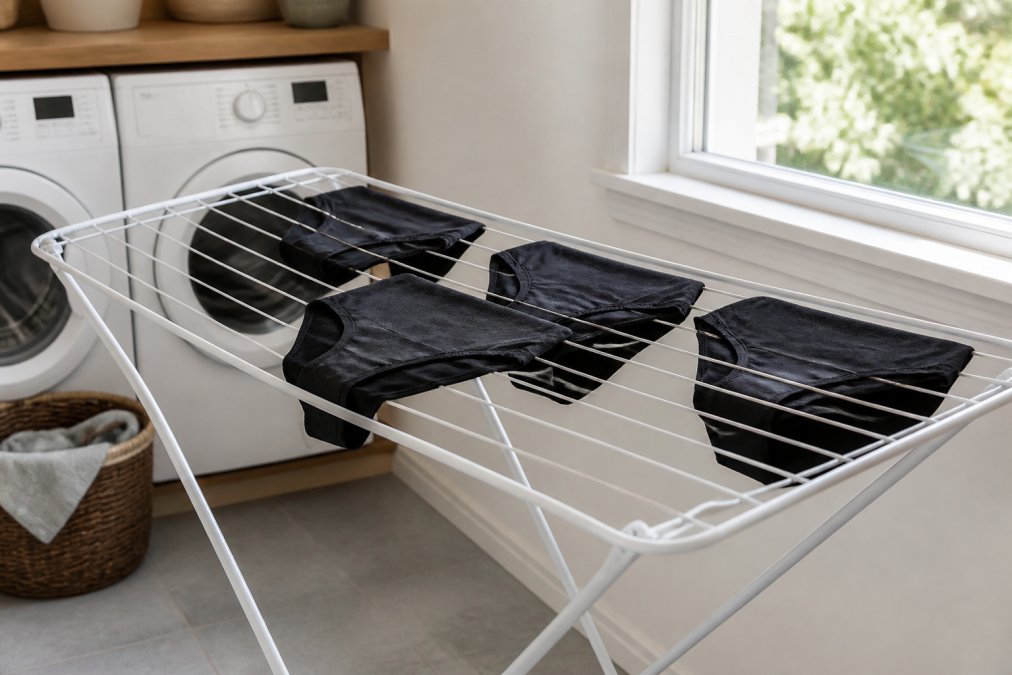
Air drying is the correct method. Hang the underwear on a drying rack or washing line away from direct sunlight. Direct sunlight has natural sanitisation properties but can fade fabric and degrade elastic over time. A spot with indirect light and good airflow is ideal. The garment typically dries within four to six hours depending on humidity.
How Water Hardness and Environment Affect Your Wash
Hard water contains elevated levels of calcium and magnesium minerals that can deposit in absorbent layers over time, reducing their ability to wick moisture and absorb fluid.
If you're in an area with hard water and notice reduced absorbency despite correct washing, a monthly soak in cold water with white vinegar can help dissolve mineral deposits. The acidity breaks down calcium build-up without harming fabric.
Humidity also affects drying time and hygiene. In high-humidity environments, ensure period underwear is completely dry before storage to prevent mildew. A fan directed at the drying rack speeds up the process.
Washing in cold water uses substantially less energy than hot washes, aligning with the sustainability case for reusable period underwear. Shorter delicate cycles also reduce water consumption. For guidance on water quality in your area, the Australian Drinking Water Guidelines from the National Health and Medical Research Council provides regional water hardness data.
Washing Period Underwear: Quick-Reference Summary
Step |
Action |
Key Rule |
|---|---|---|
After use |
Cold water rinse |
Until water runs clear |
Storage |
Breathable wet bag |
Never airtight |
Machine wash |
Delicate cycle, mesh bag |
30°C max |
Hand wash |
Cold water, gentle agitation |
Rinse thoroughly |
Detergent |
Mild, fragrance-free liquid |
No enzymes or softener |
Stain treatment |
Cold water + gentle soap |
Act before heat |
Drying |
Air dry on rack |
No tumble dryer |
Deep clean |
Cold soak, no detergent |
Monthly if needed |
Keeping period underwear in good condition comes down to consistent habits: the cold rinse, the gentle wash, the air dry. Done together, they protect the absorbent layers and leakproof construction that make the garment worth wearing. Calm Curve's OEKO-TEX certified designs are built for durability with light, medium, and heavy absorbency options and free shipping across Australia. Visit the Calm Curve website to find the right fit for your flow and routine.
Frequently Asked Questions
Are you supposed to wash your period underwear before the first use?
Yes, washing period underwear before wearing them for the first time is recommended. A gentle cold or cool machine wash removes any residue from manufacturing and helps the absorbent layers perform at their best from the start. Skip fabric softener on this first wash, as it can coat the fibres and reduce absorbency. Once washed and air dried, your underwear is ready to wear with full leakproof function.
Can I use fabric softener on period underwear?
No. Fabric softener should never be used on period underwear. It leaves a coating on the absorbent layers and moisture-wicking fabric that significantly reduces how well the gusset absorbs fluid. Over time, this coating builds up and can cause leaks, odour retention, and faster fabric breakdown. Use a mild, fragrance-free detergent instead, and skip dryer sheets for the same reason.
Should you wash period underwear separately from other laundry?
A cold rinse immediately after use removes most blood before it sets, so period underwear does not need to be washed separately from other laundry. Once rinsed, you can add them to a regular delicate cycle with similar colours. Using a mesh laundry bag protects the fabric structure and gusset during the wash. If you are managing heavy flow or staining, a separate hand wash or pre-soak first gives better results.
How do I deep clean period underwear to remove odours?
Soak the underwear in cold water with a small amount of white vinegar or bicarbonate of soda for 15 to 30 minutes before washing. This helps break down odour-causing bacteria in the absorbent layers without damaging the fabric. Follow with a gentle machine wash on a delicate cycle using a mild, fragrance-free detergent. Always air dry fully before storing, as damp fabric stored in an enclosed space is the most common cause of persistent odour.
This article was written using GrandRanker